

Peak shopping seasons like Black Friday, Cyber Monday, Back-to-School, and holiday sales bring a surge of traffic to Shopify stores. For many merchants, these high-demand periods trigger a familiar strategy: offer bigger discounts to attract more buyers. While discounts can generate short-term sales spikes, they often come at a cost—shrinking profit margins, lower perceived product value, and customers who learn to wait for the next sale.
The challenge for modern Shopify merchants is no longer just driving traffic; it’s maximizing the value of every visitor who lands on their store. That’s where a strong product bundling strategy and well-timed upsell offers can make a significant difference. Instead of reducing prices, merchants can increase average order value (AOV) by encouraging customers to purchase complementary products together, creating a win-win situation for both the business and the shopper.
Brief Summary…
A product bundling strategy often outperforms discounts during peak shopping seasons because it increases average order value (AOV), protects profit margins, and improves the customer experience. Instead of reducing prices, Shopify merchants can drive higher revenue through bundles, upsells, and cross-sells that encourage larger purchases. Shopify Apps like CXS Upsell Fusion make it easy to implement high-converting bundle offers without relying on constant discounts.
In fact, many fast-growing eCommerce brands are shifting away from heavy discounting and focusing on product bundles, cross-sells, and upsells to boost revenue during peak shopping seasons. These strategies not only help protect profit margins but also improve the customer experience by making it easier for shoppers to find complete solutions rather than individual products.
In this article, we’ll explore why upsells consistently outperform discounts during seasonal sales events, how a well-executed product bundling strategy can drive higher revenue, and the practical ways Shopify merchants can implement these tactics to grow sales without sacrificing profitability.
In This Blog, We Will Talk About…
-
- Hidden Cost of Discounting
- What Makes Upselling More Effective
- Why Product Bundling Strategy is Best for Growth
- Comparing Discounts vs. Product Bundling Strategy
- How to Build a High-Converting Product Bundling Strategy on Shopify
- Boost Peak Season Revenue With CXS Upsell Fusion
- Conclusion
- Frequently Asked Questions (FAQ)
(Jump to the section that interests you the most!)
The Hidden Cost of Discounting During Peak Shopping Seasons
Discounts can quickly boost sales during major shopping events, but they often come with hidden drawbacks. While lower prices may attract more customers, they can reduce profitability and create long-term challenges for your Shopify store.
How Discounts Erode Profit Margins
Every discount cuts into the profit you earn from each order. During peak shopping seasons, this becomes even more challenging as advertising and customer acquisition costs typically rise.
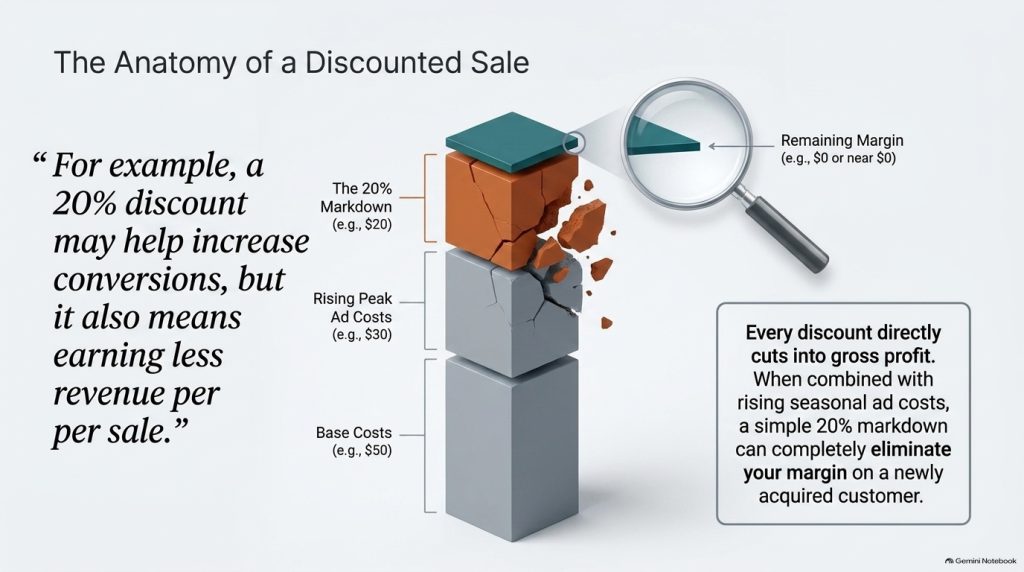
“For example, a 20% discount may help increase conversions, but it also means earning less revenue per sale.“
Instead of relying on markdowns, many merchants use a product bundling strategy to increase order value while protecting their margins.
Why Customers Become Conditioned to Wait for Sales
Frequent discounts can train customers to delay purchases until the next promotion. Over time, shoppers may become less willing to buy at full price because they expect another sale to be around the corner.
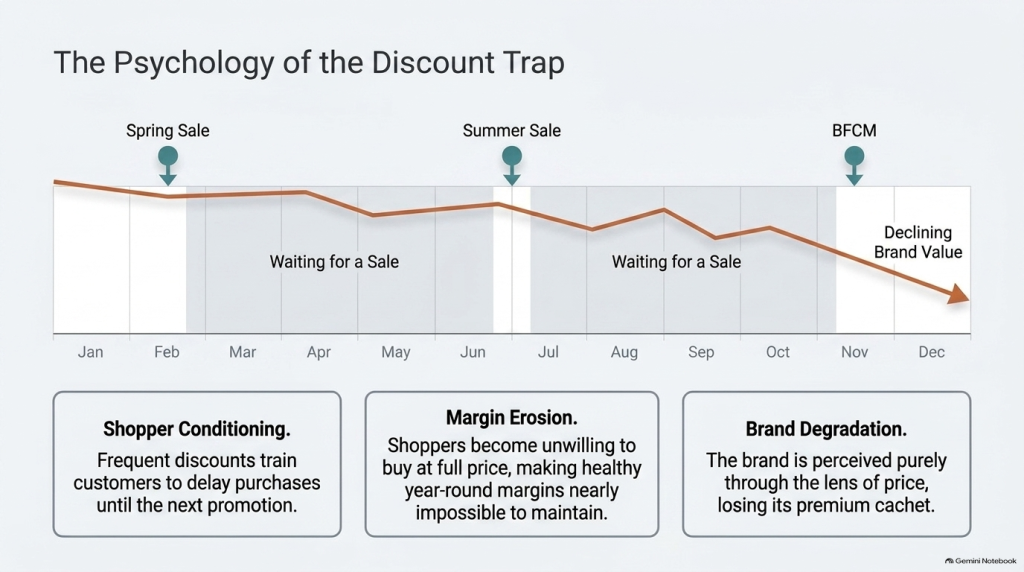
This can weaken your brand value and make it harder to maintain healthy margins year-round. A strong product bundling strategy helps avoid this cycle by offering more value rather than simply lowering prices.
What Makes Upselling More Effective Than Discounts?
While discounts focus on lowering prices, upselling focuses on increasing the value of each purchase. This approach helps Shopify merchants generate more revenue without sacrificing profit margins, making it especially effective during peak shopping seasons.
Understanding the Psychology Behind Upsells
Shoppers are often willing to spend more when they see a relevant product that enhances their purchase. For example, someone buying a camera may be happy to add a memory card or protective case if it’s presented at the right moment.
Unlike blanket discounts, upsells feel personalized and value-driven. Instead of encouraging customers to spend less, they encourage customers to get more from their purchase.
Higher AOV Without Sacrificing Margins
One of the biggest advantages of upselling is its ability to increase average order value (AOV). By recommending complementary products or premium alternatives, merchants can boost revenue from each transaction without reducing product prices.
This means higher sales and healthier profit margins—a key reason why upselling often outperforms discounting during busy shopping seasons. When combined with a strong product bundling strategy, upsells can become a powerful driver of sustainable eCommerce growth.
Product Bundling Strategy: The Secret Weapon for Peak Season Growth
A well-planned product bundling strategy helps Shopify merchants increase order value, improve the shopping experience, and drive more revenue during peak sales periods. Instead of focusing on discounts, bundles encourage customers to purchase multiple complementary products together.
What Is a Product Bundling Strategy?
A product bundling strategy involves combining related products into a single offer that provides more value than purchasing each item separately.
For example, a skincare brand might bundle a cleanser, toner, and moisturizer into a complete skincare kit. This not only increases the total purchase value but also makes shopping easier for customers.
Why Bundles Convert Better During High-Traffic Shopping Events
During busy shopping seasons, customers want quick and convenient purchasing decisions. Bundles remove the guesswork by presenting a complete solution instead of individual products.
They also increase perceived value. Rather than seeing a simple discount, shoppers feel they’re getting more for their money, which can lead to higher conversion rates and larger orders.
Types of Product Bundles Shopify Merchants Can Use
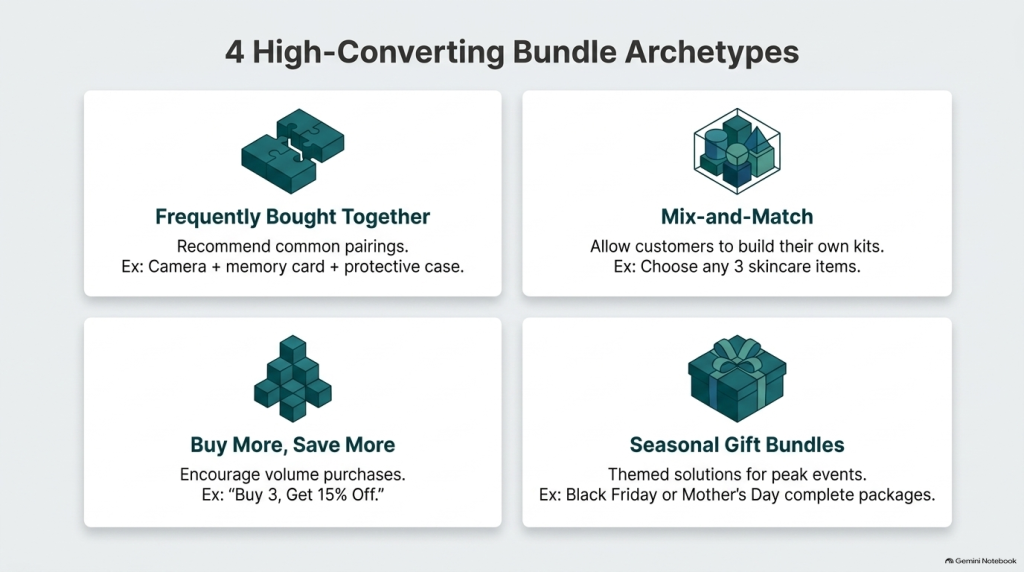
- Frequently Bought Together Bundles: Recommend products that are commonly purchased together, such as a phone case with a smartphone or coffee beans with a coffee maker.
- Mix-and-Match Bundles: Allow customers to choose products within a bundle, such as selecting any three skincare products or any four snack flavors.
- Buy More, Save More Offers: Encourage larger purchases with offers like “Buy 2, Get 10% Off” or “Buy 3, Get 15% Off.”
- Seasonal Gift Bundles: Create themed bundles for occasions like Black Friday, Christmas, Mother’s Day, or Back-to-School shopping to increase seasonal sales.
Discounts vs. Product Bundling Strategy: A Comparison
| Factor | Discounts | Product Bundling Strategy |
|---|---|---|
| Average Order Value (AOV) | Lower or unchanged | Higher through additional purchases |
| Profit Margins | Reduced due to price cuts | Protected by adding value instead of lowering prices |
| Customer Perception | Focused on saving money | Focused on getting more value |
| Shopping Experience | Product-focused | Solution-focused and convenient |
| Brand Value | Can encourage discount dependency | Maintains perceived product value |
| Long-Term Growth | Short-term sales boost | Sustainable revenue growth and retention |
How to Build a High-Converting Product Bundling Strategy on Shopify
Creating bundles isn’t just about grouping products. The most successful bundles are built around customer behavior, perceived value, and continuous optimization.
Identify Frequently Purchased Product Combinations
Start by analyzing your store data to identify products that are commonly purchased together. These natural buying patterns can reveal bundle opportunities that feel relevant and useful to customers.
For example, a skincare store might bundle a cleanser, toner, and moisturizer, while an electronics store could pair a laptop with a mouse and carrying case.
Create Offers That Increase Perceived Value
A successful product bundling strategy should make customers feel they’re getting more value, not just a discount. Bundle complementary products together, highlight the total savings, and clearly communicate the benefits of purchasing the complete package.
Keep bundle offers simple, relevant, and easy to understand.
Test and Optimize Bundle Performance
Monitor key metrics such as Average Order Value (AOV), conversion rate, and bundle attach rate to understand what’s working. Regular testing helps you refine bundle pricing, product combinations, and placement to maximize results over time.
Boost Peak Season Revenue With Upsell Fusion
How CXS Upsell Fusion Simplifies Product Bundling Strategy for Shopify Stores
Building and managing a successful product bundling strategy can be time-consuming, especially during peak shopping seasons.
CXS Upsell Fusion helps Shopify merchants create high-converting bundles and upsell offers without relying on constant discounts.
Key Features for Peak Shopping Seasons
- Frequently Bought Together Offers: Recommend complementary products to increase cart value.
- Product Bundles: Create attractive bundle offers that encourage larger purchases.
- Cart Upsells: Present relevant add-ons before customers complete checkout.
- Post-Purchase Upsells: Generate additional revenue even after an order is placed.
- Easy Shopify Integration: Set up and launch campaigns quickly without technical complexity.
- Analytics & Performance Tracking: Monitor AOV, conversions, and bundle performance to optimize results.
CXS Upsell Fusion helps merchants increase average order value, improve the customer experience, and grow revenue without sacrificing margins through excessive discounting.
Replace Discounts With Smarter Upsells
Conclusion
While discounts can generate a short-term boost in sales, they often come at the expense of profit margins and long-term brand value. A well-executed product bundling strategy offers a more sustainable approach by increasing average order value, enhancing the customer experience, and encouraging shoppers to purchase complementary products.
As competition intensifies during peak shopping seasons, Shopify merchants who focus on bundles and upsells can drive more revenue without relying on constant price cuts. By combining smart product recommendations with strategic bundle offers, you can maximize the value of every customer who visits your store.
Apps like Upsell Fusion make it easier to implement and optimize your product bundling strategy, helping you grow sales, protect margins, and turn seasonal traffic into long-term business growth.
Frequently Asked Questions (FAQ)
1. Is product bundling strategy better than discounting?
In many cases, yes. A product bundling strategy helps increase average order value and protect profit margins by encouraging customers to purchase complementary products together. Discounts can drive short-term sales, but bundles often deliver more sustainable revenue growth.
2. How do product bundles increase average order value?
Product bundles encourage customers to buy multiple related items in a single purchase. Instead of purchasing one product, shoppers are presented with a complete solution, which naturally increases the total value of the order.
3. What types of products work best in bundles?
Products that complement each other tend to perform best. Examples include skincare sets, electronics with accessories, fitness equipment with add-ons, and seasonal gift packages. The goal is to combine products that customers are likely to purchase together.
4. Can Shopify merchants create bundles without coding?
Yes. Many Shopify apps allow merchants to create and manage bundles without any technical knowledge. This makes it easy to launch bundle offers, upsells, and cross-sells directly from the Shopify admin.
5. How does CXS Upsell Fusion help with product bundling strategy?
CXS Upsell Fusion helps Shopify merchants create product bundles, frequently bought together offers, cart upsells, and post-purchase upsells from a single platform. This makes it easier to implement a high-converting product bundling strategy, increase average order value, and grow revenue without relying heavily on discounts.
About the Author: Mohd Talib

