

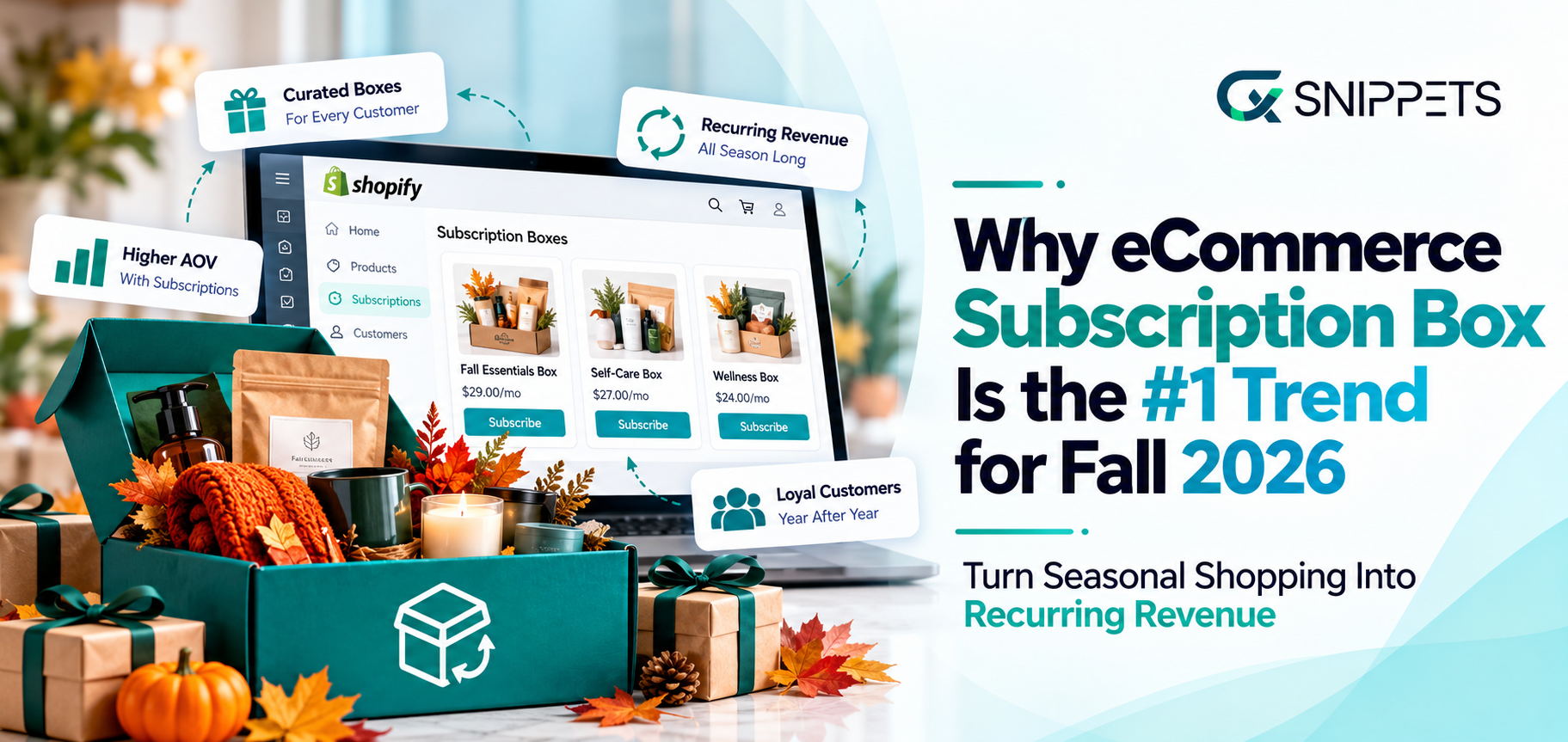
Fall is one of the biggest shopping seasons of the year, but for eCommerce brands, the opportunity is no longer limited to getting customers to make a single purchase.
As shoppers look for more convenient, personalized, and exciting ways to discover products, eCommerce subscription boxes are becoming a powerful way for brands to turn seasonal demand into recurring sales.
An eCommerce subscription box lets customers receive selected products on a recurring schedule, such as weekly, monthly, or quarterly, while giving merchants a more predictable revenue stream and more opportunities to build long-term customer relationships.
This makes the model especially relevant as brands prepare for the Fall 2026 and holiday shopping season.
But why are subscription boxes gaining so much attention this fall?
“Industry research from Global Market Insights values the subscription box market at roughly $31.9 billion in 2026, with forecasts pointing to nearly $80 billion by 2035.”
From recurring revenue and customer retention to personalized experiences and seasonal offers, subscription commerce gives eCommerce businesses several ways to make the most of the busiest shopping months.
In this guide, we’ll explore why eCommerce subscription boxes are emerging as a major Fall 2026 trend, what makes the model attractive to both customers and merchants, and how Shopify stores can introduce subscription offerings before the holiday rush.
In This Blog, We Will Talk About…
-
- What Is an eCommerce Subscription Box?
- Why Subscription Boxes Are Trending in Fall 2026
- How Shopify Stores Can Launch Subscription Boxes Before Fall Sales
- How Much Revenue Can an eCommerce Subscription Box Generate?
- Common Challenges of Subscription Box Businesses
- How to Prepare Your Subscription Program Before Black Friday
- Why eCommerce Subscription Boxes Will Continue Growing Beyond Fall 2026
- Frequently Asked Questions
(Jump to the section that interests you the most!)
What Is an eCommerce Subscription Box?
An eCommerce subscription box is a recurring purchase model where customers regularly receive a set of products from an online store based on a subscription plan.
Instead of placing the same order every time they need a product, customers subscribe once and receive their chosen products automatically on a schedule, such as weekly, monthly, or quarterly.
For example, a coffee store could offer a monthly subscription that delivers a customer’s preferred coffee beans every 30 days.
A skincare brand could create a recurring box containing a selection of products, while a pet store could offer regular deliveries of treats or essential supplies.
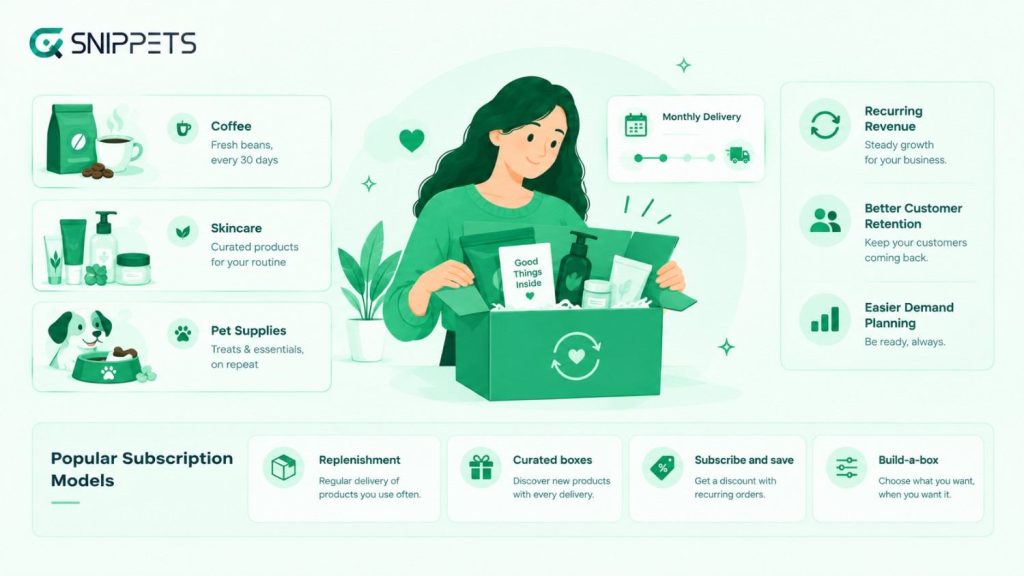
For merchants, the model goes beyond repeat purchases. Subscription boxes can create recurring revenue, encourage customer retention, and make demand easier to plan. For customers, they offer convenience and a simple way to regularly receive products they already use or discover something new.
An eCommerce subscription box can generally follow one of these models:
- Replenishment: Customers regularly receive products they use frequently, such as coffee, pet food, or skincare.
- Curated boxes: The merchant selects a collection of products for each delivery, creating a discovery-focused experience.
- Subscribe and save: Customers commit to recurring purchases in exchange for a discount or other benefit.
- Build-a-box: Customers choose the products they want and create their own recurring box.
This flexibility is one reason subscription boxes can work across different eCommerce categories.
Merchants can choose the subscription format, delivery frequency, products, and pricing that best fit their customers and business model.
Why eCommerce Subscription Boxes Are Exploding in Fall 2026
Subscription boxes are gaining momentum because they solve two problems at once: customers get a convenient way to receive products they want, while eCommerce brands get more opportunities to turn one-time shoppers into recurring customers.
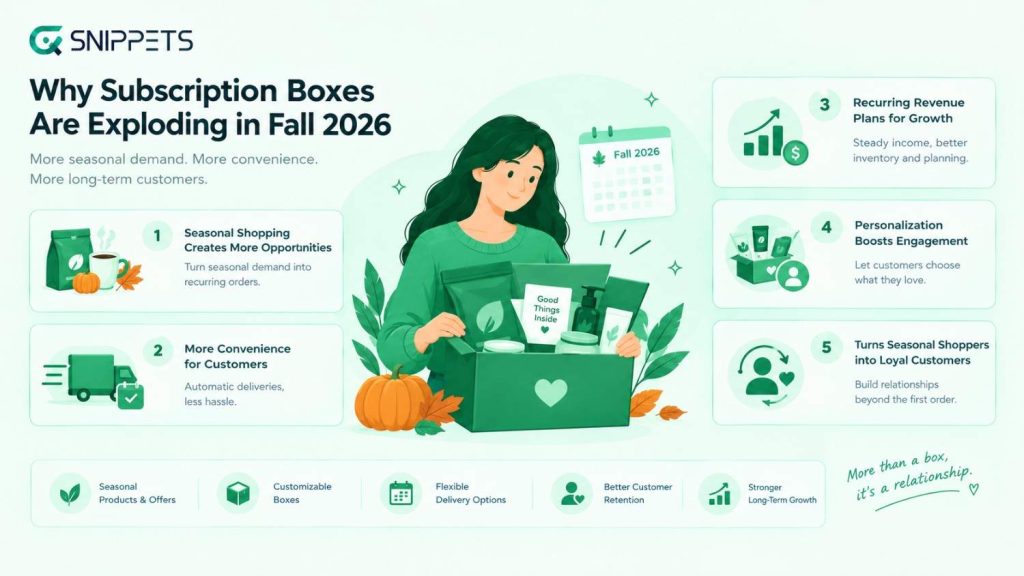
As Fall 2026 approaches, this model fits particularly well with seasonal shopping, product discovery, and the shift toward more personalized buying experiences.
Here are some of the key reasons subscription boxes are becoming an important eCommerce trend this fall.
1. Seasonal Shopping Creates More Opportunities for Subscriptions
Fall brings a fresh wave of products, promotions, and shopping occasions. From seasonal coffee and snacks to skincare, wellness products, and gift collections, merchants have plenty of opportunities to turn temporary demand into recurring orders.
Instead of offering a seasonal product only as a one-time purchase, brands can package it into a subscription plan. Customers can then receive products regularly while the merchant continues the relationship beyond the initial fall purchase.
2. Customers Want More Convenience
Nobody wants to remember to reorder the same products every few weeks. Subscription boxes remove that extra step by automatically scheduling future deliveries.
For products customers regularly use or consume, this convenience can be a major reason to subscribe. A customer who regularly buys coffee, pet supplies, or personal-care products may prefer an automatic delivery over returning to the store and placing another order.
3. Recurring Revenue Makes Business Planning Easier
One of the biggest attractions of subscription commerce for merchants is recurring revenue. Instead of relying entirely on new customers and one-time purchases, brands can build a base of subscribers who generate repeat orders.
This can make revenue planning, inventory forecasting, and customer retention efforts more structured, although subscription revenue still depends on factors such as churn, failed payments, and subscriber retention.
4. Personalization Makes Subscription Boxes More Engaging
A subscription box doesn’t have to mean sending exactly the same products to every customer. Merchants can let shoppers choose products, sizes, flavors, delivery schedules, or other preferences.
This creates room for personalized subscription experiences. For example, a beauty store could allow subscribers to select products based on their preferences, while a food brand could let customers build a box from their favorite items.
The more relevant the box feels, the easier it is to give customers a reason to continue their subscription.
5. Subscriptions Help Turn Seasonal Shoppers Into Repeat Customers
Fall and the holiday season can bring a significant wave of new shoppers. The challenge is what happens after that first order.
A subscription gives merchants another way to continue the customer relationship. Instead of ending the interaction after a seasonal purchase, a brand can offer a relevant recurring plan that encourages the customer to stay connected and purchase again.
This makes subscription boxes particularly interesting for brands preparing for Fall 2026: they can use seasonal demand as an entry point while building a longer-term customer relationship.
Also Read: 5 Subscription Box Ideas To Boost Festive Sales
How Shopify Stores Can Launch Subscription Boxes Before Fall Sales
Launching an eCommerce subscription box does not have to mean building a subscription system from scratch. Shopify merchants can add recurring purchase options to their stores and start testing subscription offers before the Fall 2026 shopping rush.
The key is to keep the setup simple: choose the right products, create flexible plans, give customers a clear reason to subscribe, and make recurring orders easy to manage.
1. Choose Products That Make Sense for Recurring Orders
Start with products customers are likely to buy more than once. Consumables and regularly used products are natural choices because customers already have a reason to reorder them.
Coffee, snacks, skincare, pet supplies, wellness products, and household essentials are a few examples. You can also create curated seasonal boxes if your products are more discovery-focused.
2. Create Flexible Subscription Plans
Different customers have different buying habits. Some may want a delivery every week, while others may prefer every month or every few months.
Offer practical billing and delivery frequencies instead of forcing every customer into the same schedule. You can also experiment with monthly plans, seasonal subscriptions, or different product combinations based on what your audience prefers.
3. Give Customers a Reason to Subscribe
Simply adding a recurring purchase option may not be enough to convince shoppers to subscribe.
Consider offering benefits such as:
- Subscribe-and-save discounts
- Exclusive products
- Free or discounted shipping
- Early access to seasonal products
- Flexible product selection
- The option to skip or change upcoming deliveries
These benefits can make the subscription feel more valuable than buying the same products individually.
4. Use CXS Subscription App to Set Up Recurring Purchases
For Shopify merchants who want to add subscription functionality without developing the entire system themselves, CXS Subscription App can help turn regular products into recurring subscription offerings.
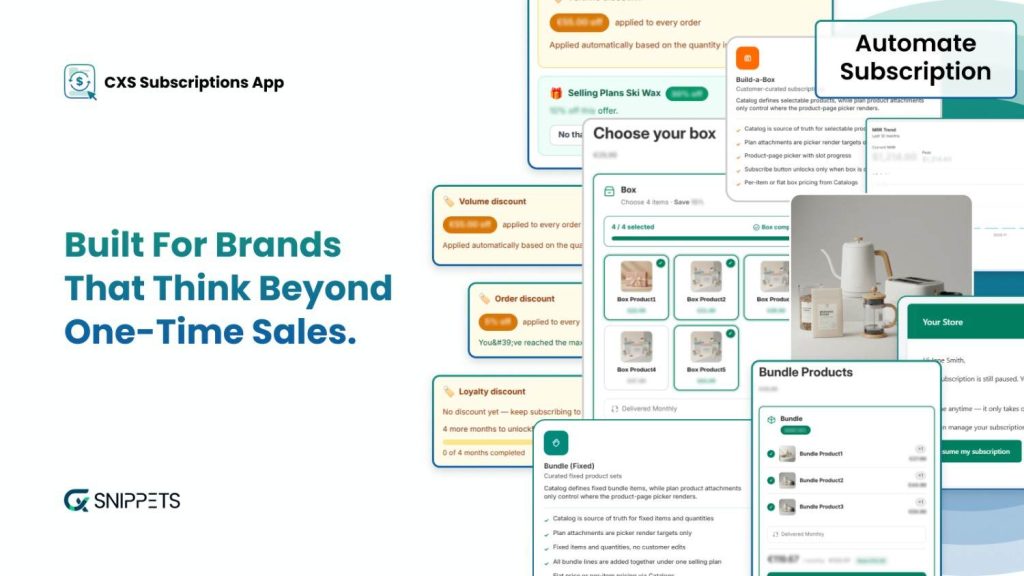
Merchants can use it to create subscription plans, offer subscribe-and-save options, and build subscription experiences around their existing products. It can also support build-a-box models, allowing customers to create a recurring box from selected products instead of receiving a fixed collection every time.
Ready to turn your Fall 2026 shoppers into long-term subscribers?
Beyond creating subscriptions, the app provides tools for managing the ongoing subscription journey, including dunning and win-back capabilities and analytics for tracking important subscription metrics such as MRR, ARR, AOV, and subscriber performance.
This makes it possible for Shopify stores to start with a simple subscription offer and gradually optimize it as they learn what customers prefer.
5. Test Your Subscription Offer Before the Fall Rush
Don’t wait until the busiest shopping weeks to find out whether your subscription model works.
Launch a small selection of subscription products first and monitor how customers respond. Pay attention to subscription sign-ups, average order value, cancellations, failed payments, and repeat purchases.
Once you identify which products and plans attract subscribers, you can expand the offer and use Fall 2026 promotions to bring more shoppers into your subscription program.
The earlier you test, the more time you have to refine your subscription experience before holiday shopping reaches its peak.
How Much Revenue Can an eCommerce Subscription Box Generate?
The revenue an eCommerce subscription box can generate depends on factors such as the subscription price, number of active subscribers, purchase frequency, customer retention, and operating costs. Unlike one-time sales, subscriptions give merchants the opportunity to generate revenue from the same customer repeatedly over time.
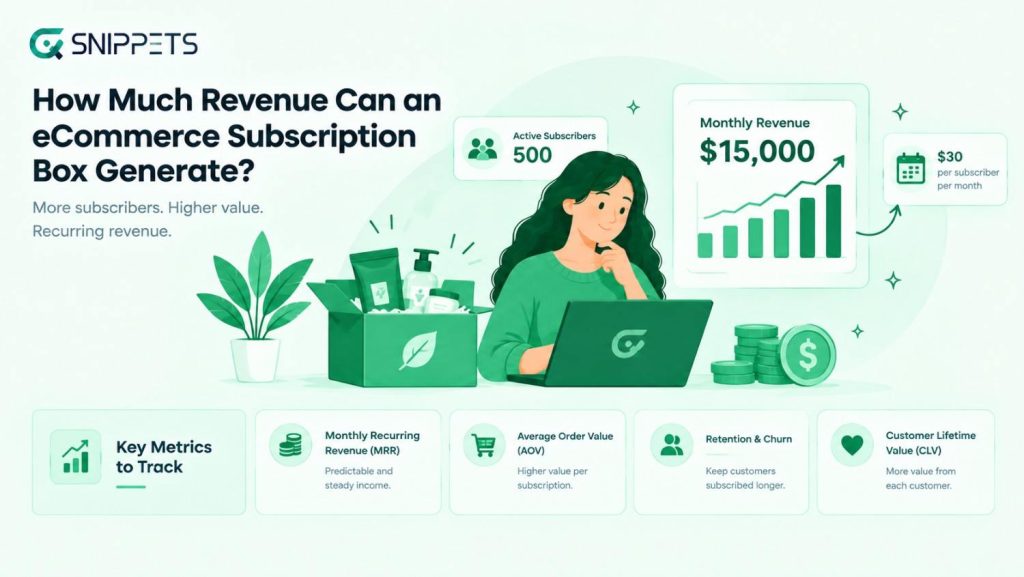
For example, a store with 500 active subscribers paying $30 per month would generate $15,000 in recurring monthly revenue, assuming all subscribers remain active and payments are successful. Increasing the subscriber base, average subscription value, or retention can increase recurring revenue further.
However, subscriber count alone does not tell the full story. Merchants should also monitor the following metrics:
- Monthly Recurring Revenue (MRR): MRR shows how much predictable subscription revenue a store generates from active subscriptions each month. For example, 500 subscribers paying $30 per month would generate $15,000 in MRR. Tracking MRR helps merchants understand whether their subscription revenue is growing or declining.
- Average Order Value (AOV): A higher subscription AOV can increase revenue without requiring the store to acquire more subscribers. Merchants can increase AOV through product bundles, premium subscription tiers, add-ons, or build-a-box options.
- Customer Retention and Churn: Getting customers to subscribe is only the beginning. If subscribers cancel after one or two deliveries, recurring revenue can quickly decline. Monitoring churn helps merchants understand why customers leave and where the subscription experience can be improved.
- Customer Lifetime Value (CLV): Subscription businesses have the opportunity to generate multiple purchases from a single customer. CLV helps merchants understand the total value a subscriber can potentially generate throughout their relationship with the store.
Ultimately, there is no fixed revenue figure for an eCommerce subscription box. A small store might generate a few thousand dollars in recurring sales each month, while a larger subscription business can build a much larger recurring revenue base.
The key is to focus not only on acquiring subscribers but also on retaining them and increasing the value of each subscription over time.
Common Challenges of Subscription Box Businesses
An eCommerce subscription box can create recurring revenue and stronger customer relationships, but running one successfully also comes with challenges. From customers canceling subscriptions to failed payments and inventory issues, merchants need to manage the entire subscription lifecycle, not just the initial sale.
Here are some of the most common challenges subscription box businesses face:
- Subscriber Churn: Customers may cancel when they no longer need the products, find the subscription too expensive, or feel that each delivery offers little new value. Offering flexible plans, relevant products, and easy subscription management can help improve retention.
- Failed Subscription Payments: Expired cards, insufficient funds, or payment issues can interrupt recurring orders. Without a system to recover failed payments, merchants can lose otherwise active subscribers and recurring revenue.
- Inventory and Fulfillment Planning: Subscription boxes require merchants to plan inventory around future orders. Unexpected subscriber growth can create stock shortages, while overestimating demand can leave merchants with excess inventory.
- Keeping Customers Engaged: The initial subscription may be exciting, but maintaining that interest over several billing cycles can be difficult. Seasonal products, personalized boxes, exclusive offers, and new product combinations can give customers more reasons to stay subscribed.
- Managing Different Subscription Plans: Customers may want different delivery schedules, products, quantities, and pricing options. Managing these variations manually can quickly become complicated as the subscriber base grows.
- Balancing Discounts and Profit Margins: Subscribe-and-save discounts can encourage sign-ups, but excessive discounts can reduce profitability. Merchants need to find a balance between making subscriptions attractive and maintaining healthy margins.
A well-managed subscription system can help address many of these challenges by automating recurring billing, subscription management, payment recovery, and customer retention workflows.
The goal isn’t simply to get customers to subscribe, but to make staying subscribed easy and valuable.
How to Prepare Your Subscription Program Before Black Friday
Black Friday can bring a surge of shoppers to your store, making it a valuable opportunity to turn seasonal buyers into long-term subscribers. But a successful subscription campaign needs preparation.
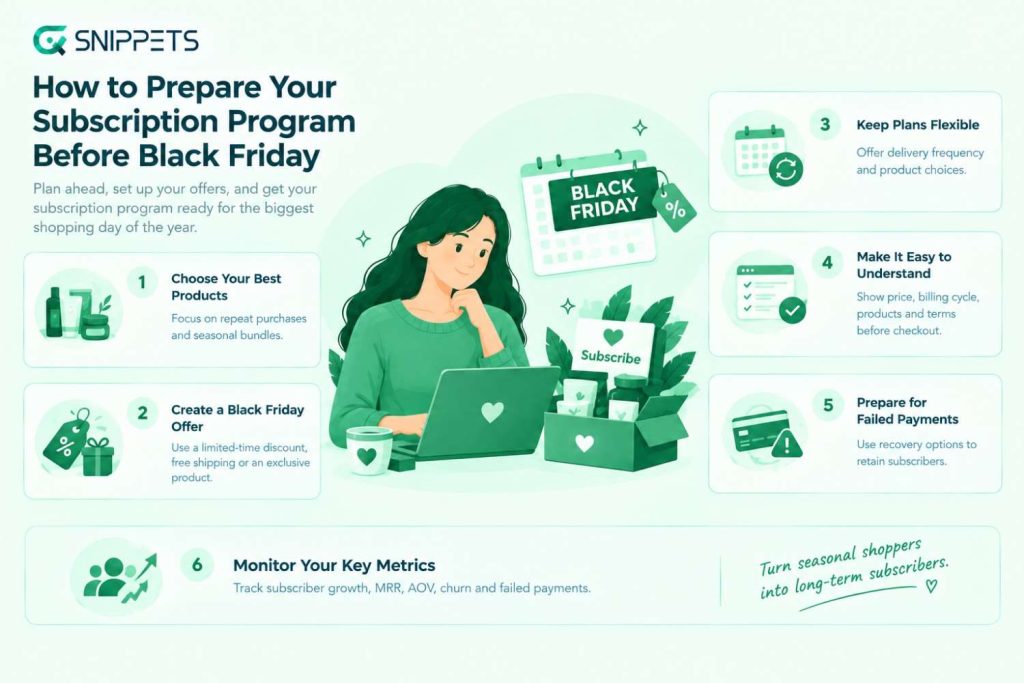
Your plans, pricing, products, and customer experience should be ready before traffic starts increasing.
Here are a few steps Shopify merchants can take to prepare their subscription program:
- Choose Your Best Products for Subscriptions: Identify products that customers are likely to purchase repeatedly. You can also create exclusive seasonal bundles or limited-time subscription offers to make the program more appealing during the Fall 2026 shopping season.
- Create a Black Friday Subscription Offer: Give shoppers a clear reason to subscribe instead of making a one-time purchase. A limited-time subscribe-and-save discount, free shipping, or an exclusive product can make the recurring option more attractive.
- Keep Subscription Plans Flexible: Give customers options for delivery frequency and product selection where possible. Flexibility can make it easier for customers to choose a plan that fits their needs and can reduce unnecessary cancellations later.
- Make the Subscription Experience Easy to Understand: Clearly display the price, billing frequency, products included, and subscription terms before checkout. Customers should know exactly what they are signing up for, especially when recurring payments are involved.
- Prepare for Failed Payments: A spike in subscriptions also means more recurring payments to manage later. Make sure your subscription system can handle failed payments and provide recovery options so payment issues don’t immediately turn into lost subscribers.
- Monitor Your Key Subscription Metrics: Track metrics such as subscriber growth, MRR, AOV, churn, and failed payments during and after Black Friday. These numbers can show which offers are attracting valuable subscribers and where your subscription program needs improvement.
Most importantly, don’t treat Black Friday as the finish line. A shopper who subscribes during a seasonal promotion can become a long-term customer if the products continue to provide value.
Use the holiday rush as an opportunity to start those relationships and build a subscription program that continues beyond the Fall 2026 shopping season.
Why eCommerce Subscription Boxes Will Continue Growing Beyond Fall 2026
Fall 2026 may be a strong starting point for eCommerce brands exploring subscription commerce, but the opportunity doesn’t end with the season. An eCommerce subscription box can turn seasonal shoppers into recurring customers while giving merchants a practical way to build repeat sales, improve retention, and create more predictable revenue.
The key is to offer subscriptions that provide genuine value. Flexible delivery options, relevant products, attractive subscriber benefits, and a smooth customer experience can give shoppers a reason to stay subscribed beyond their first order.
For Shopify merchants, now is the time to test subscription offerings and turn seasonal demand into a long-term growth opportunity.
CXS Subscription App makes it easier to launch and manage subscription programs directly on your Shopify store, with tools for recurring billing, flexible subscription plans, subscribe-and-save offers, build-a-box experiences, payment recovery, and subscription analytics.
FAQs
1. What is an eCommerce subscription box?
An eCommerce subscription box is a recurring purchase model where customers receive selected products automatically on a set schedule, such as weekly, monthly, or quarterly.
2. Why are subscription boxes popular in 2026?
Subscription boxes offer customers convenience, personalization, and recurring deliveries while helping merchants generate repeat purchases and build stronger customer relationships.
3. Are subscription boxes profitable?
They can be profitable when product margins, pricing, fulfillment costs, customer acquisition, and churn are managed effectively. Retaining subscribers is particularly important for long-term profitability.
4. What products work best in subscription boxes?
Products that customers regularly consume, replace, or enjoy discovering work well, including coffee, snacks, skincare, pet supplies, wellness products, and household essentials.
5. How do I create a subscription box on Shopify?
Choose suitable products, decide your pricing and delivery frequency, and add a subscription solution to your Shopify store. You can then create recurring plans and promote them to customers.
6. What is the difference between a subscription box and a membership?
A subscription box typically involves recurring payments for products delivered on a schedule, while a membership usually charges recurring fees for benefits such as discounts, exclusive content, or VIP access.
7. How often should subscription boxes be delivered?
Monthly delivery is a common starting point, but the ideal frequency depends on the product and customer usage. Weekly, biweekly, quarterly, or custom schedules can also work.
8. How can I reduce subscription churn?
Offer flexible plans, relevant products, subscriber benefits, and easy subscription management. Payment recovery tools and win-back campaigns can also help retain customers who are at risk of leaving.
9. What is a subscribe-and-save model?
Subscribe-and-save lets customers receive products on a recurring schedule in exchange for a discount or other benefit, encouraging repeat purchases while creating recurring sales for the merchant.
10. Which Shopify app can help create subscription boxes?
CXS Subscription App helps Shopify merchants create recurring subscription plans, subscribe-and-save offers, build-a-box experiences, and manage key subscription activities from their store.
About the Author: Mohd Talib

